
Your Old Videos Are Still Making Someone Money. It's Not You.
By Greg Lewis · June 9, 2026
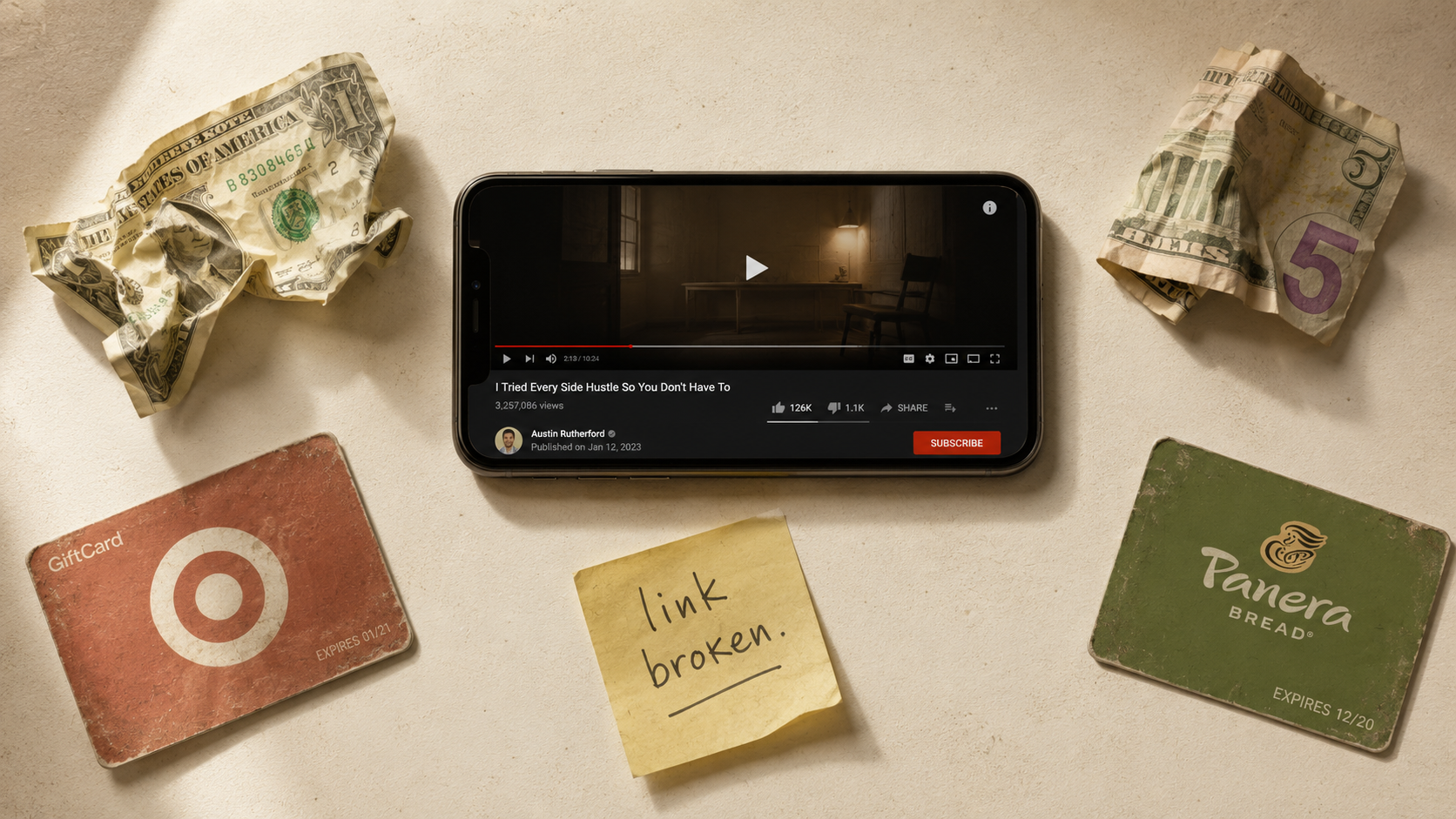
Your old videos are still getting views, still ranking, still sending buyers to product links — links that expired months ago. Here's what that's costing you and how to fix it in 20 minutes.
You uploaded a video two years ago. Maybe three. You showed your audience how to set up a home gym, what gear you packed for a camping trip, or which skincare products finally cleared your skin.
That video still gets views every week. People still find it in search. They still click through to your description, scroll past your outdated link-in-bio, and then go buy the products you recommended — from someone else's affiliate link.
Not yours. You let yours expire.
This is the most common way creators lose money, and almost nobody talks about it.
The Shelf Life Problem Nobody Warned You About
When you were active, you set up affiliate links. Amazon Associates, maybe a few brand deals. You pasted them into video descriptions. It worked.
Then you got busy. You moved to a new platform. You changed niches. Life happened.
The links stayed. But Amazon Associates links expire if you don't make sales for 90 days. Brand deal links get rotated out. Products get discontinued. The URLs you carefully placed in 47 video descriptions now point to 404 pages or, worse, to a competitor's product.
Meanwhile, your content is still ranking. YouTube's algorithm doesn't care that you haven't posted in eight months. If the video is good, it keeps showing up. If it answers a real question, people keep watching it.
The traffic is there. The audience intent is there. The purchase is happening.
You're just not getting paid for it.
What "Passive Income" Actually Requires
The creator economy sold a version of passive income that glosses over a critical step: the passive part only works if your infrastructure is still intact.
A video is passive. A recommendation is passive. But an affiliate link is a piece of infrastructure. It needs to go somewhere valid. It needs to point to a product that still exists. It needs to be tied to an account that's still active and earning.
For most creators who slowed down or stopped, that infrastructure decayed quietly while the content kept working.
The content did its job. The monetization didn't.
The AI Shopping Problem Making This Worse
Here's what's changed recently that creators aren't paying attention to.
AI shopping agents — Google's AI Overviews, ChatGPT's shopping mode, Perplexity's product recommendations — are now doing product research on behalf of buyers. These agents don't click affiliate links. They read structured data. They look for products that have clear descriptions, verified availability, and a recommendation attached to a credible source.
If your shop page doesn't have that infrastructure, the AI agent skips you entirely. The buyer gets a recommendation from a source that has it together. You get nothing.
This is already happening. It's going to accelerate.
The window to fix your infrastructure before agentic commerce fully takes over is open right now. It won't stay open.
What Fixing This Used to Look Like
Before, the fix was manual and painful.
You'd have to audit every video description. Re-apply to affiliate programs. Find updated product links one by one. Rebuild your Amazon storefront. Update every description across every platform. Then figure out how to make your shop page readable by AI agents, which required knowing what structured data even means.
Most creators looked at that list and decided it wasn't worth the time. They walked away from the traffic entirely.
That was the right decision given what the fix required. It's not the right decision anymore.
What ShopaPost Does Instead
Paste a URL. Any URL from your content library — a YouTube video, a TikTok, a blog post, an old Instagram story you saved.
ShopaPost reads it. The AI pulls every product you mentioned, matched against live product data with a confidence score showing how closely each match aligns with what you actually featured. Within minutes, you have a clean, organized shop page with working affiliate links, real product names and descriptions, and structured data that AI shopping agents can actually read.
You don't update 47 video descriptions. You build one shop, link to it, and every video in that category points to a page that's current, monetized, and machine-readable.
The traffic your old videos already have starts earning again.
The Creators Getting the Most Out of This Right Now
The creators seeing the biggest immediate wins on ShopaPost aren't the ones posting daily. They're the ones who built an audience two or three years ago on a specific topic — home organization, outdoor gear, budget travel, fitness — and still have that content ranking.
Their audience intent is proven. The search volume is documented. They have a library of content that AI agents can reference as editorial credibility. What they didn't have was a monetization layer that was still working.
That's exactly what a ShopaPost shop is.
If your channel has more than 10,000 subscribers and you haven't posted in six months, you're sitting on proven traffic with a broken revenue layer. That's not a dead channel. That's an unmonetized asset.
How to Start in the Next 20 Minutes
Go find your five most-viewed videos. Not your newest — your most-viewed. The ones that still get comments, still get questions, still generate search traffic even though you haven't touched them.
Paste the first one into ShopaPost. Watch what comes back. You'll see which products our AI matched, the confidence score on each match, and a live shop page you can share immediately.
Do all five. You'll have a shop built from your best-performing content in under half an hour, connected to real affiliate links, readable by AI agents, and ready to earn on every view your old videos still pull.
Your content already did the work. ShopaPost is just the system that finally captures what it was worth.
Start free at shopapost.com. No credit card. No brand deal. Just paste your first link.
Creator commerce changes every week. I read everything so you don't have to.
One email a week. What's working in affiliate and creator commerce right now, from someone doing this since 1997. No fluff, no pitch fests, unsubscribe anytime.