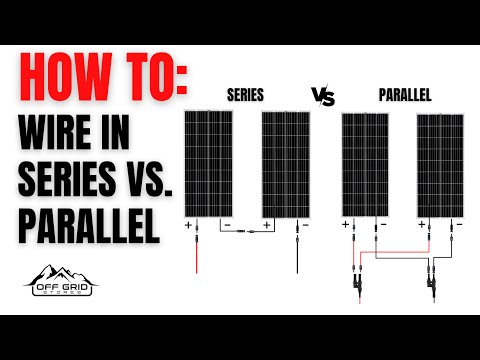
This bundle provides the essential components for understanding and implementing solar panel wiring in both series and parallel configurations. Aimed at beginners, it includes everything needed to set up and test a basic solar power system. The included tools help demonstrate how different wiring methods impact voltage and current, preparing users for more complex solar projects.
Curated by The Shelf Curator · Updated June 2026
Built for off-grid beginners who need to scale their voltage or amperage without melting connections. Not for permanent high-voltage residential rooftop arrays — this shop focuses on portable 12V/24V DIY setups.
Curator's pick: Victron Energy SmartSolar MPPT 100/20 Charge Controller
Cheap controllers fail when you switch from series to parallel because they can't handle the fluctuating input. This Victron unit is the only one here that reliably tracks the maximum power point without overheating during peak summer sun.
⚠ Worth knowing: When wiring in parallel, your amperage increases, which can quickly exceed the rating of standard 10AWG cables if you're running more than three panels. If your run is longer than 20 feet, you'll need to calculate voltage drop or risk losing significant power to heat.
Deep Cycle Lithium Battery Upgrades for Off-Grid PowerPortable Solar Generators and Foldable Panels for CampingMarine-Grade Inverters for Van and Boat Conversions
This shop is built around the fundamental concepts of solar panel wiring: series and parallel configurations. It provides all the necessary components to not only understand these concepts but also to hands-on implement and test them. It's designed for anyone looking to demystify how solar panels connect and perform.
This bundle is perfect for budding solar enthusiasts, students, or DIYers looking to build their first off-grid system or experiment with solar power. It's ideal for a garage workbench, a small outdoor educational setup, or even learning in a classroom setting, providing practical experience with solar electricity.
Approaching the budget, a starter path focusing on just panels and connectors will cost around $100-$150. For a complete understanding and functional system, including all tools and a charge controller, the full build cost ranges from $260 to $420.
Full build
$260–$420
Starter
$100–$150
Panels + Connectors Only
Best forSolar EducationDIY Off-Grid ProjectsElectrical ExperimentationHome Energy LearningRenewable Energy Starters
Renogy 100 Watt 12 Volt Monocrystalline Solar Panel
This monocrystalline solar panel converts sunlight into electricity, providing a foundational power source. It is suitable for small off-grid applications or as a component in a larger DIY system. The panel is designed for direct current output, which can then be wired in series or parallel configurations.
100 Watt output
12 Volt nominal
Monocrystalline silicon cells
Aluminum frame
IP65 junction box
In this shop: The Renogy 100 Watt Monocrystalline Solar Panel is central to demonstrating Solar Panel Wiring Components for Series Parallel due to its role as the primary energy source.
These MC4 Y branch connectors are designed for splitting or combining solar panel strings. They are used to connect multiple solar panels in a parallel configuration to increase current output. The connectors ensure a secure and watertight connection between panel cables.
MC4 male and female connectors
Y-branch configuration
UV resistant plastic enclosure
IP67 waterproof rating
Rated for 30A current
In this shop: BougeRV MC4 Y Branch Connectors are included to facilitate the parallel wiring setups, aligning with the focus on Solar Panel Wiring Components for Series Parallel.
This solar extension cable with MC4 connectors is used to extend the distance between solar panels or from panels to a charge controller. It is rated for outdoor use, providing a reliable connection in various environmental conditions. Proper cable length and gauge are important for system efficiency.
10 AWG wire gauge
Male and female MC4 connectors
UV resistant insulation
Tinned copper conductors
Available in various lengths
In this shop: The Renogy 10AWG Solar Extension Cable is a practical inclusion for arranging panels in different series and parallel layouts, fitting the Solar Panel Wiring Components for Series Parallel theme.
The Victron Energy SmartSolar MPPT charge controller regulates the power flow from solar panels to batteries. It optimizes energy harvest through Maximum Power Point Tracking (MPPT) technology. This controller is suitable for both series and parallel panel arrays to protect batteries from overcharging.
MPPT charge technology
Bluetooth connectivity
100V PV input, 20A charge current
12V/24V auto-select
Integrated temperature sensor
In this shop: The Victron Energy SmartSolar MPPT Charge Controller effectively manages the output from varying series and parallel panel configurations, essential for Solar Panel Wiring Components for Series Parallel.
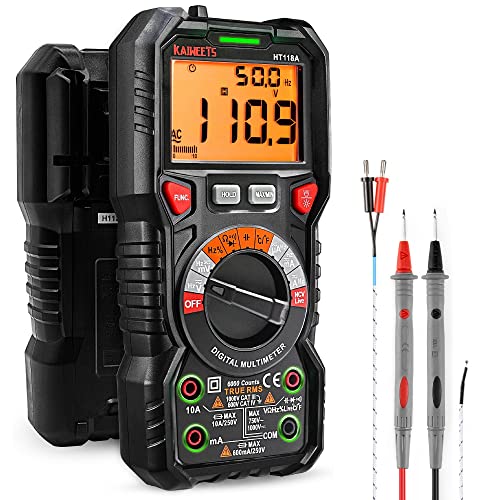
This digital multimeter is used for measuring voltage, current, and resistance in electrical circuits. It allows users to verify actual electrical outputs from solar panels and confirm the effects of series and parallel wiring. The True RMS function provides accurate readings for non-sinusoidal waveforms.
True RMS measurement
6000 display counts
Measures AC/DC voltage and current
Resistance and continuity testing
Backlit LCD display
In this shop: The Kaiweets Digital Multimeter is included to concretely measure the electrical differences between series and parallel wiring, supporting the educational aspect of Solar Panel Wiring Components for Series Parallel.
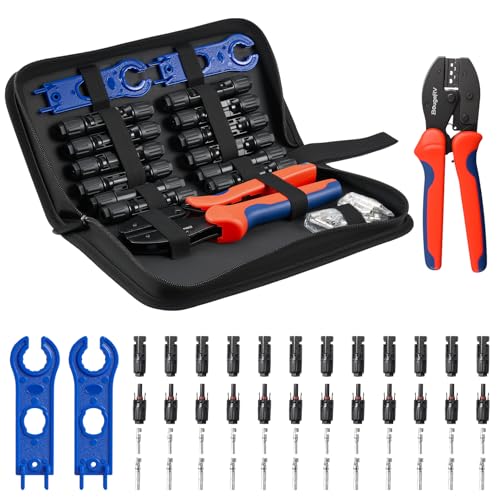
This tool kit contains specialized crimpers and wrenches for assembling and disassembling MC4 solar connectors. Proper crimping ensures a secure, low-resistance, and weather-resistant connection, which is critical for solar system performance and longevity. The tools facilitate safe and efficient installation of solar wiring.
MC4 crimping tool
MC4 assembly/disassembly wrenches
Wire strippers included
High-carbon steel construction
Ergonomic handles
In this shop: The iExcell MC4 Solar Connector Tool Kit is a necessary addition for hands-on work with Solar Panel Wiring Components for Series Parallel, ensuring proper and safe connector installation.
This kit allows users to visually and measurably understand the difference in voltage and current output between series and parallel solar panel configurations.
The included tools ensure proper and safe installation of solar panel wiring, promoting system longevity and efficiency for all connection types.
You gain practical experience connecting all essential components of a basic solar power system, from panels to charge controller, preparing you for larger projects.
What to know
While comprehensive for wiring, this bundle does not include a battery, so you'll need to acquire one separately to store the generated energy.
The single 100W panel is great for learning, but it will only provide a limited amount of power, so it's not suitable for powering significant loads.
How to use this together
1
Assemble Your Panels
Begin by securely mounting your Renogy 100 Watt Monocrystalline Solar Panel. For initial testing, ensure it is in direct sunlight. This step is crucial as stable panel placement prevents damage and ensures consistent power generation for your experiments.
2
Wire in Series or Parallel
Decide whether you want to test series (positive to negative) or parallel (positive to positive, negative to negative) wiring. Use the BougeRV MC4 Y Branch Connectors for parallel configurations, and the Renogy 10AWG Solar Extension Cable to extend distances or facilitate series connections. Proper connection ensures correct voltage/current flow and is vital for accurate measurements.
3
Connect to Charge Controller
Connect the output from your solar panel array (series or parallel) to the Victron Energy SmartSolar MPPT 100/20 Charge Controller's PV input terminals. This controller is essential for regulating power flow and will protect any connected battery from overcharging. Connecting it correctly, with proper polarity, ensures the system's safety and functionality.
4
Measure and Analyze
Use the Kaiweets Digital Multimeter TRMS 6000 Counts to measure the voltage and current at various points in your system: directly from the panel(s), after the array, and at the charge controller output. This allows you to observe how series and parallel wiring impact electrical output and monitor the charge controller's performance.
5
Maintain Connections with Tools
Utilize the iExcell MC4 Solar Connector Tool Kit to ensure all MC4 connections are properly crimped and secured. This not only prevents loose connections but also ensures safe, weather-resistant joints, minimizing power loss and prolonging the life of your solar wiring.