ShopaPost.com
Are you @Drone Science Tech? This shop was built from your video. Claim it →
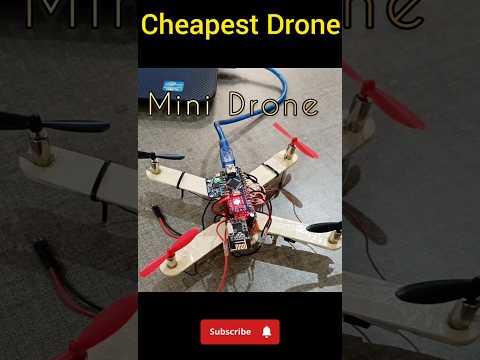
DIY Long Range Arduino Nano Mini Drone Kit

This page may contain affiliate links. We may earn commissions from qualifying purchases.

DIY Long Range Arduino Nano Mini Drone Kit

This bundle provides the essential components for constructing a DIY long-range mini drone based on the Arduino Nano platform. It's designed for hobbyists and students interested in learning about drone mechanics, electronics, and programming. The selected parts facilitate the creation of a functional and affordable mini-drone.

Curated by Workshop Notes · Updated June 2026

Built for hobbyists looking to bridge the gap between benchtop breadboarding and flight-ready builds without overspending on proprietary flight controllers. Not for beginners seeking a plug-and-play experience—this shop focuses on the raw hardware required for manual soldering and tuning.

Curator's pick: NRF24L01+ 2.4GHz Wireless Transceiver Module

This is the backbone for any serious distance; I prefer it because you can easily add an external antenna to the PA/LNA version later. Most cheap integrated modules drop signal the moment you put a wall or some brush between you and the drone.

⚠ Worth knowing: Using an Arduino Nano for flight control means you have no overhead for complex GPS features or high-def video transmission. These 8.5mm coreless motors are consumables—they run hot and will eventually burn out after a few dozen hard landings, so always keep a spare set in your kit.

Soldering Stations and Bench Heat Shrink KitsMicro-Sized FPV Camera and VTX Combos3D Printed Micro Drone Frame Blueprints

This shop is built around creating an affordable, long-range mini-drone using readily available components, with the Arduino Nano at its core. It emerged from the popular #shorts and DIY communities, focusing on hands-on learning and practical application.

This bundle is ideal for robotics hobbyists, students, and anyone eager to dive into drone development, electronics, and microcontroller programming. It's particularly suited for educational settings or personal projects where understanding the build process is as important as the final product.

Approaching the budget is straightforward: start with the essentials like the Arduino Nano and motors to grasp basic control. A full build, including all components, ranges from $48 to $100, offering significant value for a customizable drone platform.

Full build

$48–$100

Starter

$30–$65

Arduino Nano, Coreless Motors, and Propellers

Best forDIY Drone BuildersElectronics EnthusiastsSTEM Education ProjectsMicrocontroller ProgrammingBudget-Friendly Robotics
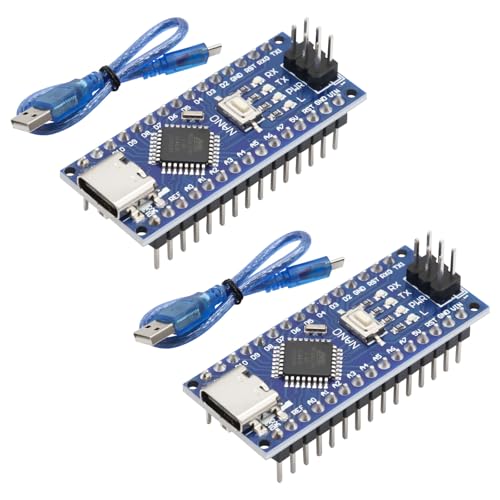
Arduino Nano Everyday Board

Arduino Nano Everyday Board

98%

Arduino

ASIN:
B0F1FQMNXM

The Arduino Nano Everyday Board is a compact, breadboard-friendly microcontroller board. It is suitable for embedded projects and serves as the core processing unit for the drone, interpreting sensor data and controlling motor output.

  • ATmega328P microcontroller
  • Small footprint, breadboard-friendly
  • Multiple analog and digital pins
  • USB mini-B connectivity
  • 3.3V/5V operation

In this shop: The Arduino Nano Everyday Board aligns with the DIY Long Range Arduino Nano Mini Drone Kit vibe by providing the central intelligence for a custom-built, programmable drone.

View details →
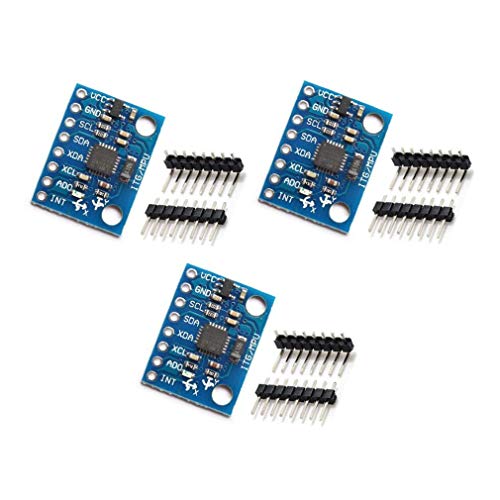
MPU-6050 6-Axis Gyroscope and Accelerometer

MPU-6050 6-Axis Gyroscope and Accelerometer

90%

Generic

ASIN:
B00LP25V1A
Sensor$5-$10

The MPU-6050 is a 6-axis motion tracking device combining a 3-axis gyroscope and a 3-axis accelerometer on a single chip. This sensor is crucial for flight stabilization and orientation tracking, providing the drone with data on its position and movement in space.

  • 3-axis gyroscope
  • 3-axis accelerometer
  • I2C digital output
  • Low power consumption
  • Integrated DMP for complex calculations

In this shop: The MPU-6050 6-Axis Gyroscope and Accelerometer fits the DIY Long Range Arduino Nano Mini Drone Kit vibe by offering essential motion sensing for stable and controllable flight.

View details →
NRF24L01+ 2.4GHz Wireless Transceiver Module

NRF24L01+ 2.4GHz Wireless Transceiver Module

92%

Generic

ASIN:
B0GTLQDQLB

The NRF24L01+ is a 2.4GHz wireless transceiver module known for its low power consumption and robust wireless communication capabilities. It enables the drone to communicate with a remote controller over a significant distance, fulfilling the 'long-range' aspect of the build.

  • 2.4 GHz operating frequency
  • Low power wireless communication
  • Up to 100 meter range (line of sight)
  • SPI interface
  • Auto-acknowledge & retransmit

In this shop: The NRF24L01+ 2.4GHz Wireless Transceiver Module is appropriate for the DIY Long Range Arduino Nano Mini Drone Kit vibe by providing the necessary wireless link for remote control.

View details →
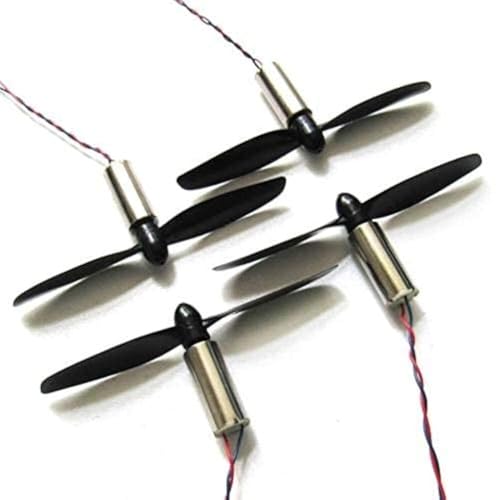
Coreless Motors 8520 for Micro Drones

Coreless Motors 8520 for Micro Drones

88%

Generic

ASIN:
B076M7G24G
Motors$10-$20

These Coreless Motors 8520 are small, lightweight DC motors designed for micro and mini drone applications. They provide the thrust required for the drone's flight, chosen for their efficiency and suitability for compact builds.

  • 8.5mm x 20mm dimensions
  • Coreless design for responsiveness
  • Standard for micro drones
  • Low vibration operation
  • Operates on 3.7V

In this shop: The Coreless Motors 8520 for Micro Drones fit the DIY Long Range Arduino Nano Mini Drone Kit vibe as the primary propulsion for a small, custom-built aircraft.

View details →
75mm Propellers for Micro Drones

75mm Propellers for Micro Drones

85%

Generic

ASIN:
B0G3XVM9JS

These 75mm Propellers are specifically sized for micro drones and are compatible with 8520 coreless motors. They convert the motor's rotational energy into lift, enabling the drone to fly.

  • 75mm diameter, 2-blade
  • Matches 8520 motors
  • Lightweight plastic construction
  • Push-on mounting
  • Set of multiple propellers

In this shop: The 75mm Propellers for Micro Drones are essential for the DIY Long Range Arduino Nano Mini Drone Kit vibe, providing the physical mechanism for flight.

View details →
3.7V 500mAh LiPo Battery

3.7V 500mAh LiPo Battery

90%

Generic

ASIN:
B0F5BH3MWQ
Battery$10-$20

This 3.7V 500mAh LiPo Battery is a compact and lightweight power source commonly used in mini drones. It supplies the necessary electrical energy to all components, offering a balance between flight time and drone weight.

  • 3.7V nominal voltage
  • 500mAh capacity
  • Lithium Polymer chemistry
  • Lightweight for drone use
  • JST-PH 2.0 connector

In this shop: The 3.7V 500mAh LiPo Battery supports the DIY Long Range Arduino Nano Mini Drone Kit vibe by providing the compact and efficient power source needed for flight.

View details →

What works

  • The combination of the NRF24L01+ and Arduino Nano enables custom long-range control mechanisms, perfect for experimental drone operation.
  • Utilizing readily available and affordable components makes this build highly accessible for educational purposes and iterative development.
  • The modular nature of the components allows for easy troubleshooting, upgrades, and personalization, fostering a deeper understanding of drone mechanics.

What to know

  • Achieving stable long-range flight may require significant tuning and programming expertise beyond basic assembly, adding a learning curve.
  • The compact nature of the components means precise soldering and wiring are often necessary, which can be challenging for beginners.

How to use this together

  1. 1

    Assemble the Core Electronics

    Begin by connecting the MPU-6050 6-Axis Gyroscope and Accelerometer to the Arduino Nano Everyday Board. The MPU-6050 provides vital orientation data, making it critical for the drone's flight stability. Ensure correct pin connections for I2C communication (SDA, SCL, VCC, GND) as per the Arduino Nano documentation to ensure accurate sensor readings from the start.

  2. 2

    Integrate Wireless Communication

    Next, connect the NRF24L01+ 2.4GHz Wireless Transceiver Module to your Arduino Nano. This module is essential for remote control, enabling the 'long-range' aspect of the drone. Proper connection (SPI pins: CSN, CE, SCK, MOSI, MISO) is crucial for reliable communication with your ground station controller, which you'll build separately.

  3. 3

    Mount Motors and Propellers

    Attach the Coreless Motors 8520 to your drone frame, ensuring they are securely fastened and correctly oriented. Then, place the 75mm Propellers onto the motor shafts. Double-check that propellers are matched to their respective motor rotation (clockwise/counter-clockwise) to generate proper lift and prevent immediate crashes.

  4. 4

    Connect Power and Test

    Finally, connect the 3.7V 500mAh LiPo Battery to your drone's power distribution system (or directly to the Arduino if using a simple setup with a motor driver). Before the first flight, perform initial power-on tests to ensure all components receive power and the Arduino can communicate with the MPU-6050 and NRF24L01+. This systematic approach helps isolate any wiring issues early.

Frequently asked questions